The delta, ridden on top of the dykes
Forty thousand square kilometres of water, rice and fruit, with a lane network on the canal banks that is the friendliest cycling surface in Vietnam.
At a glance
| Where | South-west of Ho Chi Minh City, from 85 km out to the Cambodian border |
| Getting there | 2 hours by road to the delta edge, 3 h 30 to Can Tho |
| Nights needed | 2 nights for the classic loop, 4 to reach Chau Doc |
| Best months | November to April, dry season |
| Avoid | September and October in a high-water year |
| Altitude | Sea level, and in places below it |
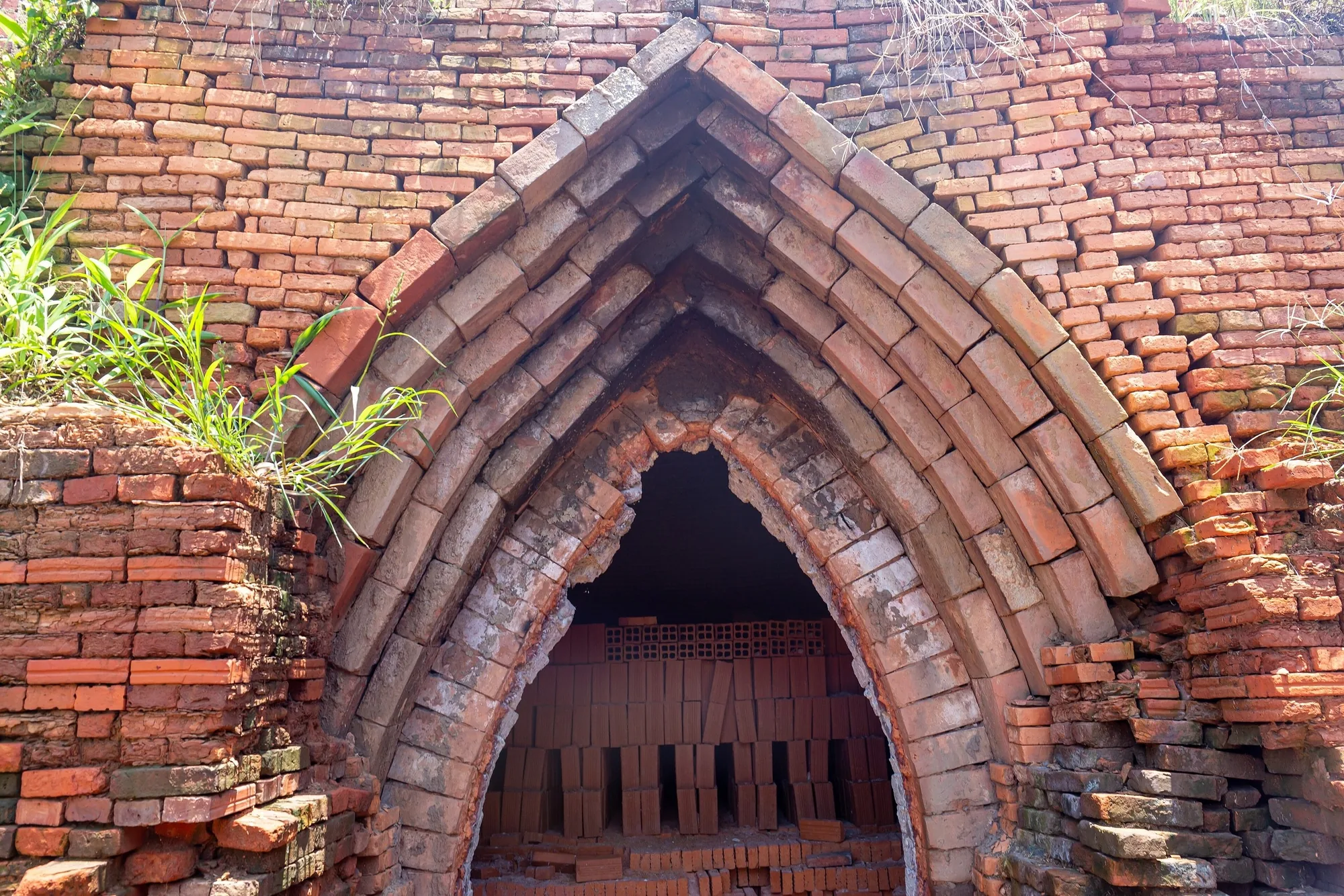
| Known for | Floating markets, coconut, river fish, brick kilns |
| Ride it by | Bicycle — flat, and the lanes exclude cars |
What the delta actually is
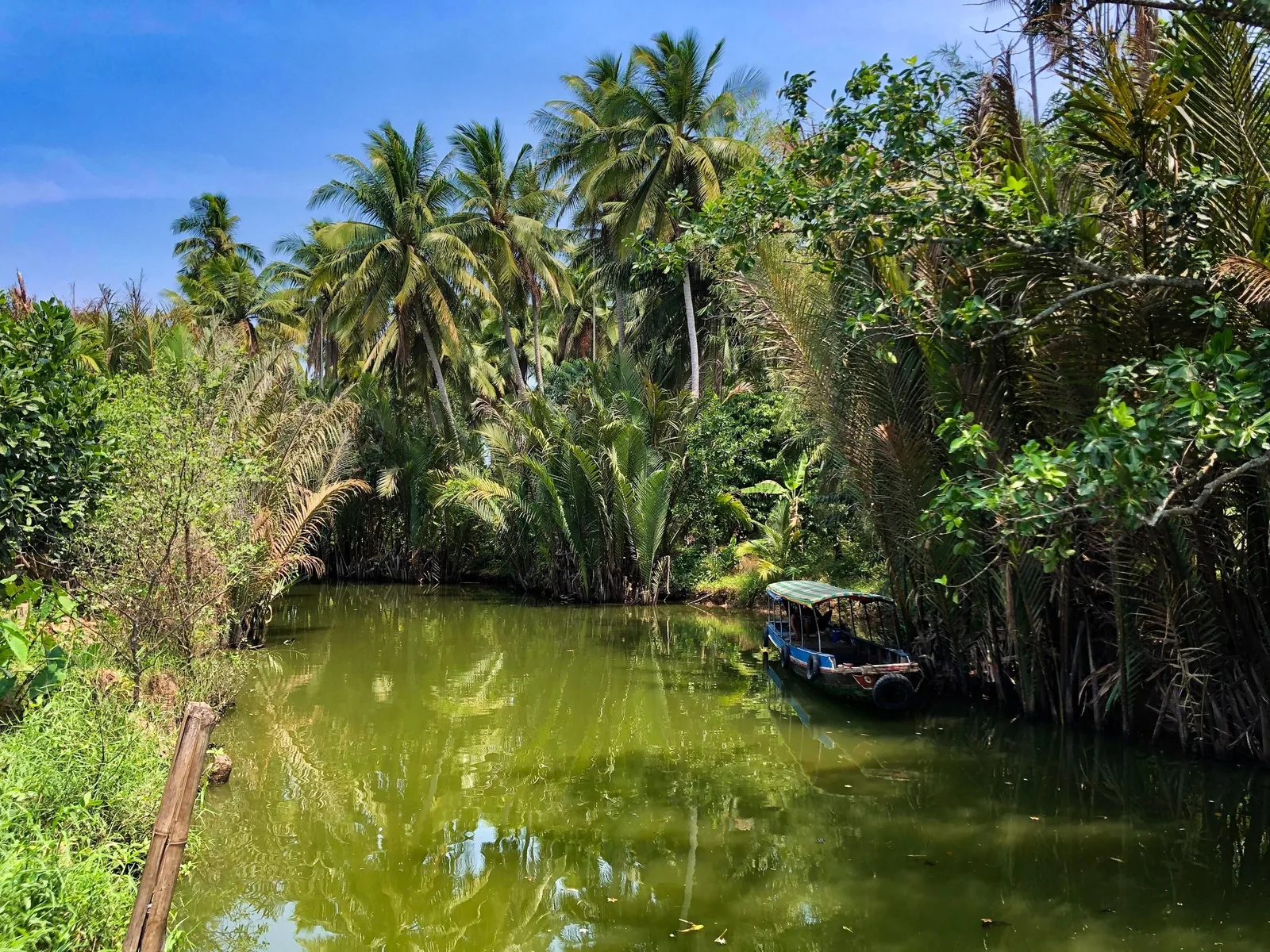
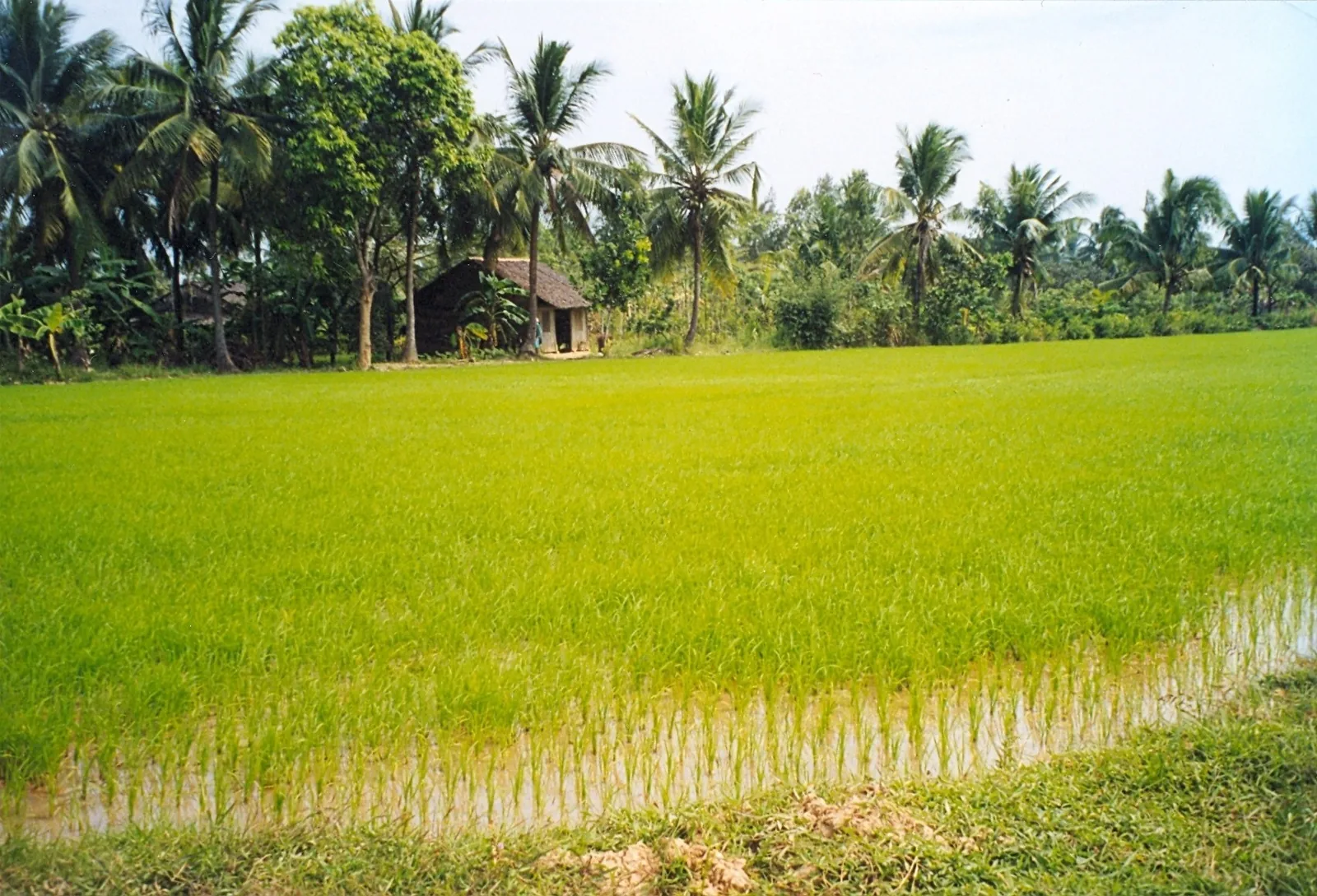
The Mekong arrives from Cambodia and splits into nine channels, which then split again into thousands. What you ride through is not really land with rivers on it; it is water with strips of raised ground between, most of them built by hand and topped with a concrete lane.
Those lanes are the reason to ride here. They are a metre and a half wide, they run along the top of the dykes, and no car can use them. You spend a day riding past houses, orchards and school gates with nothing overtaking you, which is an experience you cannot get anywhere else in Vietnam.
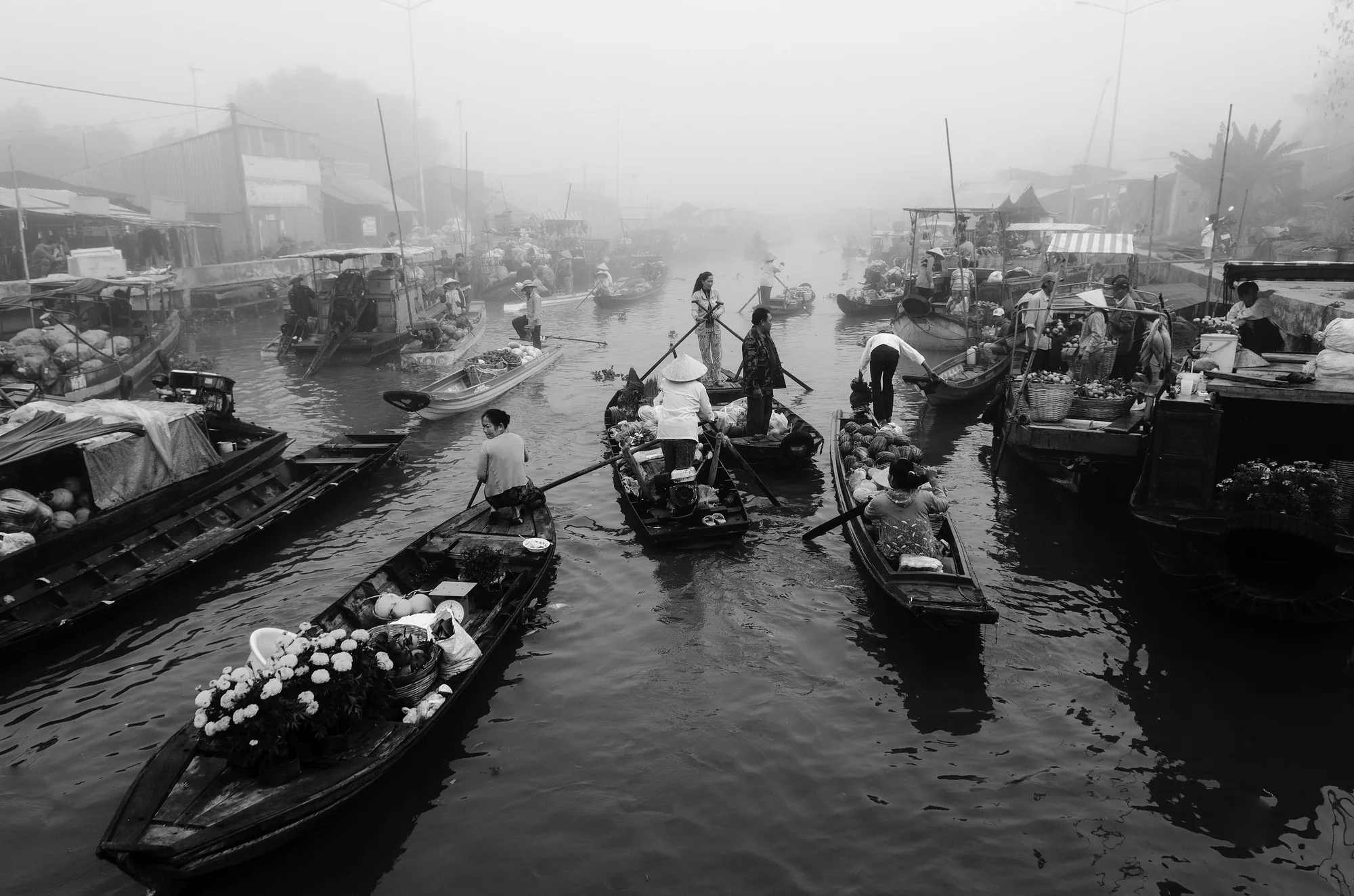
The delta is also the most changed part of the country. Bridges have replaced most of the big ferries in the last fifteen years, the wholesale trade has moved onto lorries, and the floating markets have shrunk with it. Cai Rang is still a real wholesale market at six in the morning. Cai Be is now largely a stop for tour boats, and we do not include it, because being shown a staged thing is worse than not being shown it.
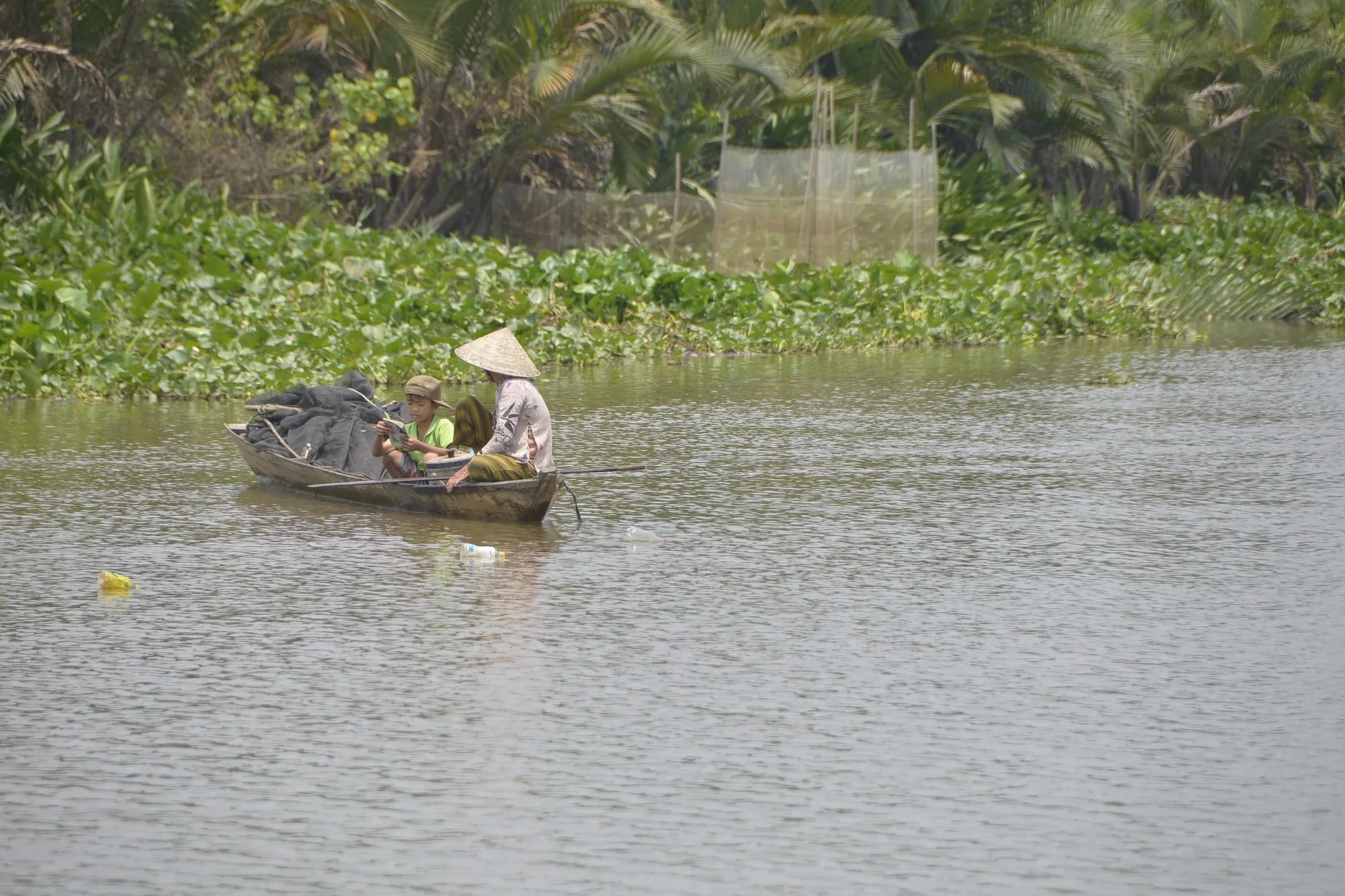
The other honest note: the water is not clean. The canals carry agricultural runoff, aquaculture waste and household drainage. It is beautiful from the bank and you should not swim in it.
How many nights, and why more is not better
Two nights covers the classic route: Ben Tre, the ferry crossings, Vinh Long and Can Tho for the market. Three gives you a slower version with an extra riding day.
Beyond three nights, the delta repeats. It is genuinely uniform: the lane, the canal, the coconuts and the bridge you saw on day one are what day five looks like too. Riders who book five days in the delta usually tell us afterwards that three would have been enough.
The exception is Chau Doc, near the Cambodian border, which is a different place: Cham Muslim villages, the Tra Su melaleuca forest, and Sam Mountain, which is the only hill in the region. That is worth two extra nights, and it is a four-hour drive from Can Tho.
When to go, month by month
| Months | What it is like | Verdict |
|---|---|---|
| Nov – Feb | Dry, 24 – 32°C, lower humidity, fruit season starting | The best months |
| Mar – May | Dry, 32 – 38°C, humid, hard riding after 10:00 | Rideable with a 06:00 start |
| Jun – Aug | Wet season, afternoon storms, mornings usually clear | Fine if you ride early |
| Sep – Oct | Peak water, some lanes flooded, routes rerouted on the day | Avoid in a high year |
The delta's wet season is not like the north's. It rains hard in the afternoon and the mornings are usually dry, so a trip that starts riding at 06:00 and finishes by noon works through most of the year. What does not work is the flood peak in September and October of a high-water year, when the lanes themselves go under.
Getting there and moving around
| Option | Time | Cost | Notes |
|---|---|---|---|
| Private car from Ho Chi Minh City | 2 h to Ben Tre, 3 h 30 to Can Tho | USD 65 – 110 each way | Necessary if you are carrying bikes |
| Sleeper bus or limousine van | 3 h 30 to Can Tho | USD 8 – 16 | Frequent and comfortable |
| Flight, Hanoi – Can Tho | 2 h | USD 55 – 130 | Useful at the end of a longer trip |
| Ferries within the delta | 5 – 20 min | USD 0.20 – 0.60 | Constant, and part of the fun |
The Trung Luong expressway takes most of the pain out of leaving Ho Chi Minh City, but the first hour is still city traffic. That is the argument for a vehicle transfer to the delta edge rather than riding out of the city, which we do not do.
What things cost
| Item | Typical price |
|---|---|
| Homestay room with fan and net, dinner and breakfast | USD 14 – 25 |
| Three-star hotel in Can Tho | USD 26 – 45 |
| Riverside eco-lodge, Ben Tre | USD 55 – 110 |
| Bowl of hu tieu or a rice plate | USD 1.50 – 3 |
| Dinner, river fish, several dishes shared | USD 6 – 12 |
| Cai Rang market boat, private, 3 hours | USD 18 – 30 |
| Sampan through the water coconut channels | USD 5 – 9 |
| Small ferry crossing with a bike | USD 0.20 – 0.60 |
Photographs
When to skip the delta
- If you want scenery you can photograph from a distance. The delta is flat and close-up. There is no viewpoint and no horizon, and photographers who come for landscape leave disappointed.
- If you cannot ride steadily at low speed. A metre and a half of concrete with a canal on each side is not the place to discover a wobble.
- If you are here in September or October of a flood year. Ask us; we watch the river levels and we will tell you.
- If heat is a problem for you and you are coming in March, April or May. 36 degrees with 75 per cent humidity is the limit for most visitors, and the delta has no shade on the open lanes.
- If you want a floating market as advertised. Cai Rang at 06:00 is real and shrinking. At 08:00 it is boats selling coffee to boats selling coffee.
Riding the delta with us
Our three-day route runs Ho Chi Minh City to Ben Tre, across to Vinh Long by ferry, and into Can Tho for the Cai Rang market at first light. 146 km, no climbing worth the name, on wide-tyred bikes because the lanes are rougher than they look.
Mekong Delta, 3 days — full itinerary and prices. It also forms the last three days of the fourteen-day route.
Ask about delta dates
Three days slots easily into a bigger trip. Tell us what else you are doing and we will fit it in.
Questions travellers ask most
Is the Mekong Delta worth it if I have already seen rivers elsewhere?
It is worth it for the lanes rather than the river. Riding a dyke top at walking-pace-plus with houses on either side and nothing motorised anywhere near you is the specific thing this region offers.
If your interest is the river itself, two days is plenty, and a boat does it better than a bicycle.
Which floating market should I go to?
Cai Rang, at Can Tho, arriving before 06:15. It is the largest wholesale market left and it is genuinely trading rather than performing.
Phong Dien, 20 km further out, is smaller and quieter and worth it if you have a second morning. Cai Be we skip.
Can I combine the delta with Cambodia?
Yes. There is a river border crossing at Vinh Xuong, north of Chau Doc, with boats through to Phnom Penh in about five hours.
Bikes travel on the boat. It is a good way to end a Vietnam trip and start a Cambodian one, and we can arrange the Vietnamese half of it up to the border.
How bad are the mosquitoes?
Present at dusk and dawn near standing water, and a real nuisance at riverside homestays without nets — most now have them.
Dengue is present in the delta and there is no vaccine you will have had. Repellent with DEET, long sleeves at dusk and a net at night are the sensible precautions, and this is worth a conversation with a travel clinic before you come.
Read next
Tell us about the ride you have in mind
Dates, party size and the places you care about are enough to start. You get a draft route and an indicative price, not a brochure.